


A square face and fine hair is a specific combination that calls for specific solutions. The right style softens the jawline, adds volume where the hair is thin, and makes the whole look feel intentional. This guide covers the best hairstyles for square face fine hair -including cuts, lengths, styling techniques, and what to say to your stylist.
Every recommendation here is built around both the face shape and the hair type together, because what works for thick hair on a square face often fails completely on fine hair.
What Makes a Style Work for a Square Face
A square face has a strong, defined jawline, a wide forehead, and roughly equal width at the temples and jaw. The overall shape is angular. The goal of styling is to introduce softness and visual movement so the eye travels up and down rather than side to side.
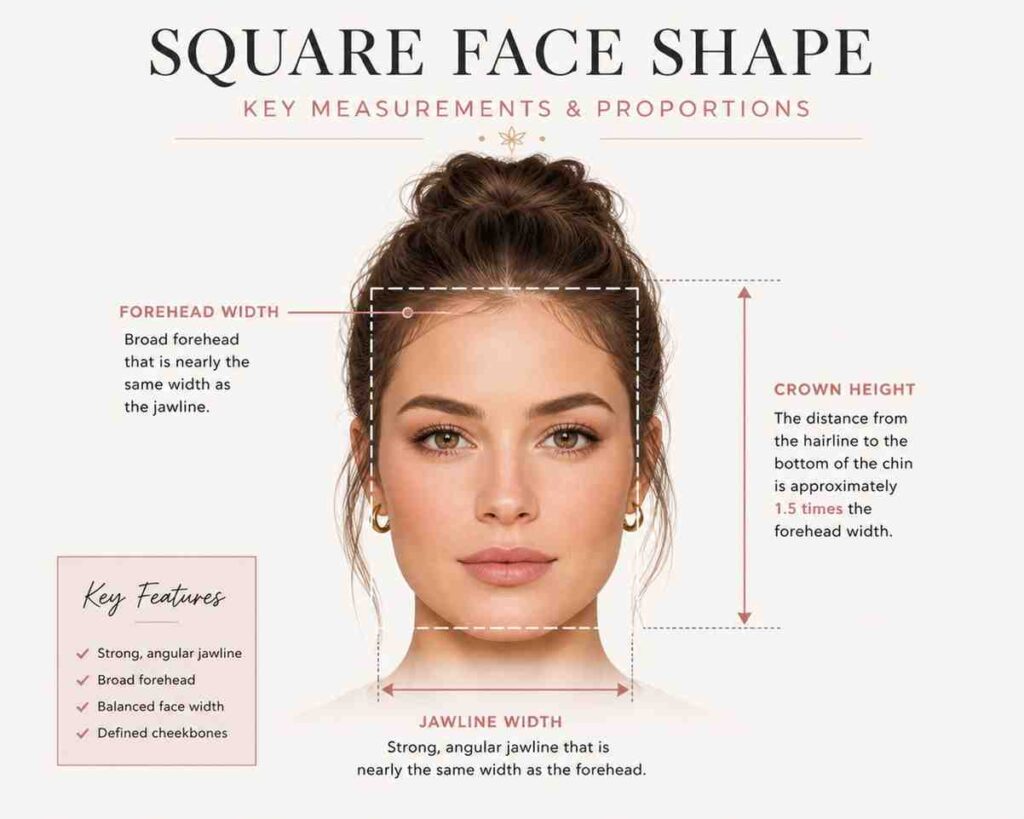
Three styling principles apply to every square face – regardless of hair type:
- Soften the jawline with layers, wispy ends, or lengths that fall above or below the jaw – not at it.
- Add height at the crown to create a longer, more oval silhouette and draw the eye upward.
- Avoid extra width at the forehead and jaw – blunt cuts at cheek or jaw level work directly against you.
Fine hair square face combinations are especially vulnerable to blunt, one-length cuts because fine hair lies close to the head and mirrors the face’s outline without adding any softness.
How Fine Hair Changes the Equation
Fine hair tends to lie flat against the head, especially by midday. There is simply less bulk to hold a shape. That flatness matters enormously for a square face because it allows the face’s angular outline to show through the hair without any softening buffer.
You have probably experienced this: you style your hair in the morning, get some lift at the roots, and by 2 p.m. everything has collapsed to a smooth cap around your head. The volume disappears and the jawline comes back into full view. Fine hair needs structural support – from the cut itself, from products, and from technique – to hold any shape past the first hour.
Volume for fine hair is both the challenge and the answer. Adding volume in the right places – specifically at the crown and through the mid-lengths – softens the angular profile of a square face. Adding volume at the sides makes the jaw look wider. The cut has to work first, and the styling has to reinforce the cut.
Best Hairstyles for a Square Face with Fine Hair
These six styles are chosen specifically for the fine hair and square face combination. Each one adds volume and movement where fine hair needs it most, while softening the jaw’s angles.
Soft, Wispy Bangs with Layers
Soft, wispy bangs are cut thin and light, falling across the forehead in loose, feathered pieces that stop short of the brows or brush just past them. The layers below the bangs fall at different lengths through the mid-face and jaw, creating movement and visual texture.
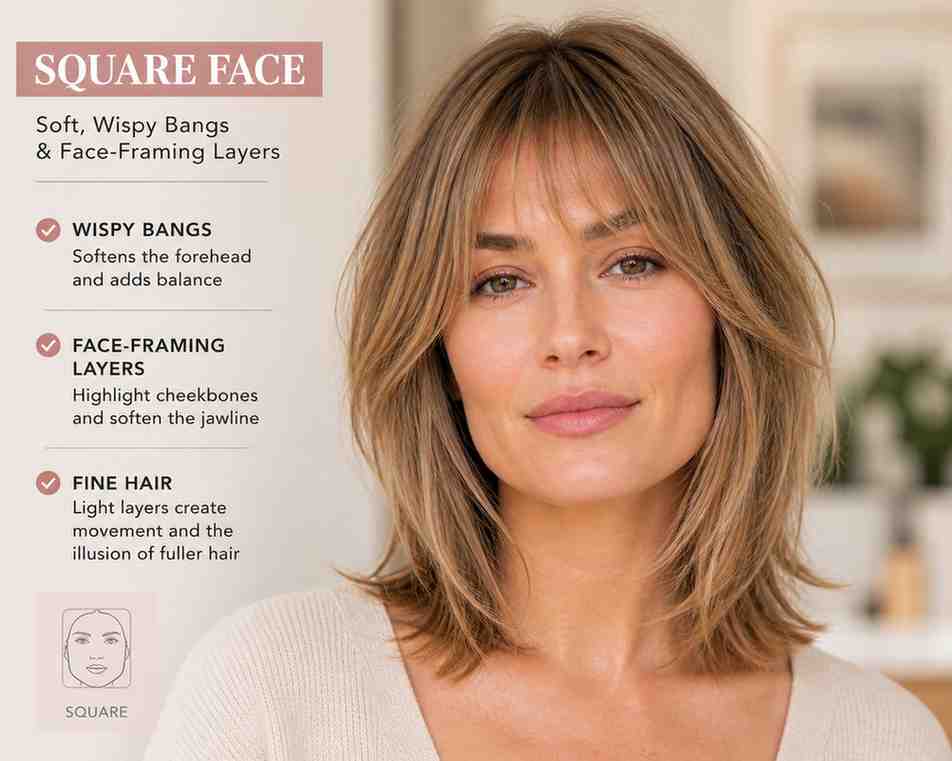
This style breaks up the wide forehead of a square face and draws the eye inward toward the center of the face. The wispiness is especially important for fine hair because heavy, blunt bangs collapse and look limp without enough density to hold them up.
Styling tip: Blow-dry the bangs with a small round brush, directing the airflow downward while curling the ends slightly inward or outward for a soft curve.
Lob (Long Bob) with Textured Ends
A lob is a long bob that sits anywhere between the chin and the collarbone. The ends are cut unevenly so they fall in soft, wispy pieces rather than a solid, even line. This length clears the jaw entirely, which means the jawline is not framed or emphasized by the hair’s weight.

The textured ends add the visual fullness that fine hair lacks at the tips, making the overall silhouette look denser than it actually is.
Styling tip: Apply a small amount of volumizing mousse to damp hair before blow-drying, then use a round brush to roll the ends slightly outward as you dry the last few inches.
Voluminous Blowout with Side Part
A voluminous blowout lifts the hair away from the scalp with heat and a round brush, creating height at the crown and soft wave through the lengths. The side part shifts the hair off-center, which breaks the symmetry of a square face and makes the forehead appear narrower on the part side.

This style works especially well for fine hair because the blowout technique gives fine strands temporary body and movement they cannot achieve on their own.
Styling tip: Blow-dry the roots first while bending forward, directing the airflow at the root rather than along the strand.
Curtain Bangs with Face-Framing Layers
Curtain bangs are parted in the center and swept to each side, framing the face in two soft, curved sections that taper toward the cheekbones.
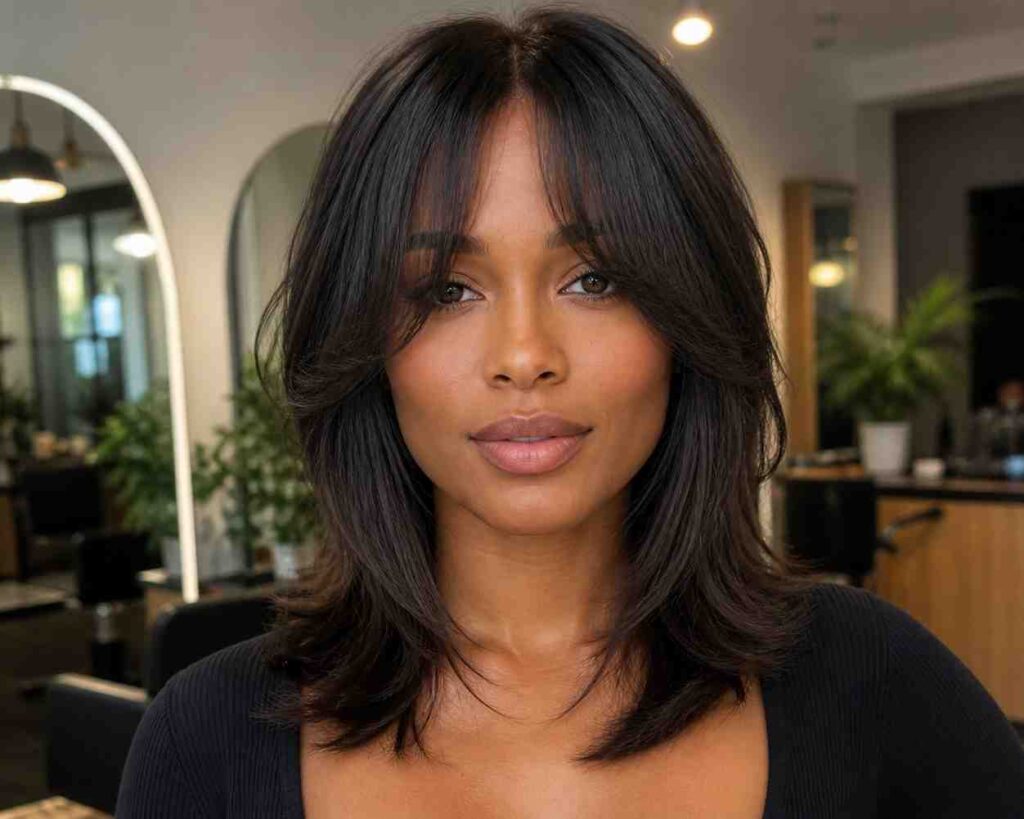
Face-framing layers cut below the bangs pull long pieces forward around the jaw at an angle, softening the jaw’s corners without covering them.
The combination creates a vertical focal line down the center of the face, which visually lengthens the square face shape.
Styling tip: Ask your stylist to point-cut the bangs so they have soft, graduated edges rather than a solid, weighted line.
Pixie Cut with Lifted Crown
A pixie cut keeps the sides and back short while leaving more length and volume at the crown. The top section is styled upward and slightly forward, creating a clear vertical lift that elongates the face.

This style softens the square jawline by drawing all the visual attention upward, away from the jaw entirely. Fine hair actually holds a pixie cut well because there is minimal weight to pull the style down.
Styling tip: Apply a small amount of volumizing mousse at the roots of the crown section and blow-dry while lifting the hair upward with your fingers.
Shoulder-Length Shag with Choppy Layers
A shoulder-length shag features multiple layers cut throughout the hair at different lengths, with choppy ends that break up the hair’s outline into uneven, textured pieces. The layers start high, often at the crown, and stack through the mid-lengths and ends.

Choppy layers add visible texture and the appearance of thickness, which directly addresses fine hair’s flatness. The shoulder length clears the jaw and lets the layers do the visual work of softening the face’s angles.
Styling tip: Scrunch a curl cream or light mousse into damp hair and let it air-dry, or use a diffuser for more volume at the crown.
Styles to Avoid and Why
These four styles consistently work against the fine hair and square face combination. Each one either emphasizes the jaw’s width, adds unwanted horizontal lines, or collapses without enough density to hold shape.
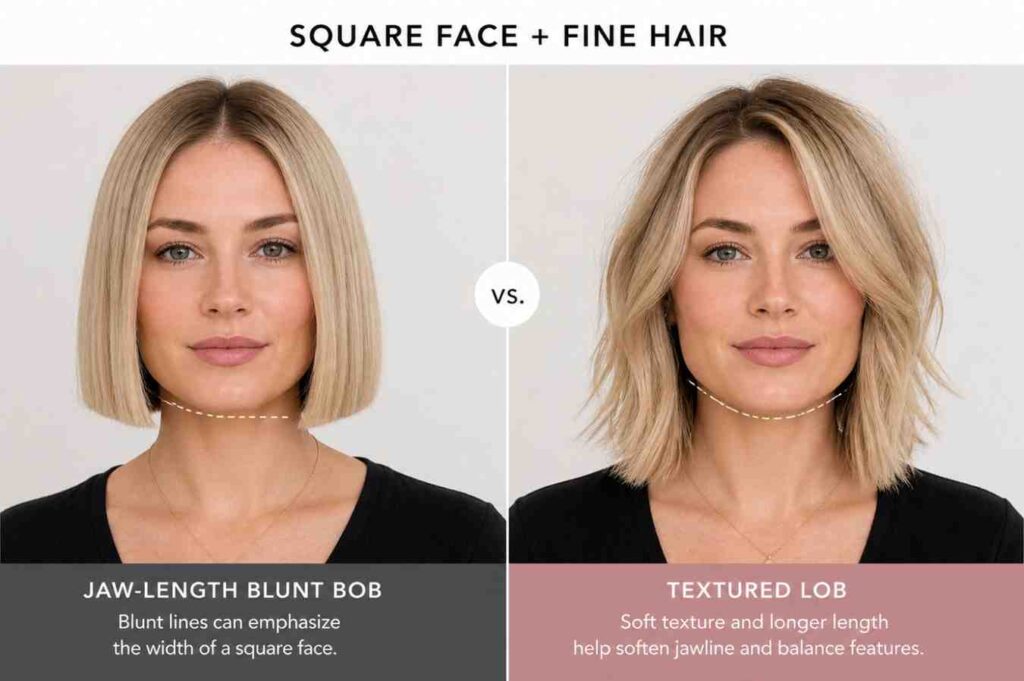
- One-length blunt bobs at jaw level: The blunt line ends exactly where the jaw is widest, and fine hair’s flat surface acts like an arrow pointing directly at that width.
- Full, straight-across bangs: A square face is already wide across the forehead and temples – full bangs emphasize that horizontal line instead of softening it.
- Very long, straight hair with no layers: Without layers or movement, fine hair follows the outline of the square face precisely, making every angle more visible rather than less.
- Chin-length blunt bobs: This length and cut combination frames the jaw’s width with a flat, even line that mirrors the square face’s shape exactly.
Styling Tips to Add Volume Without Weight
The right products and technique make a significant difference for fine hair. These five tips build volume at the root and keep it there:

- Start with mousse at the roots: Apply volumizing mousse directly to damp roots before blow-drying. Mousse gives fine hair temporary structure without the weight of oils or creams.
- Flip and dry: Tip your head forward and direct airflow at the roots – not along the lengths. Volume for fine hair starts at the root, not the tip, and drying in a lifted position helps it hold.
- Use dry shampoo preventatively: Apply it to the roots before your hair gets flat to prevent collapse, not just correct it. It also adds a gritty texture that mimics fullness.
- Skip heavy oils on the lengths: A shine serum along the lengths pulls fine strands together into thin clumps and reduces volume. One small drop on the very ends is enough.
- Use a medium round brush: Roll it under each section and direct airflow over the top as you pull through. The tension and heat together train fine hair to hold lift and a soft curve.
How to Talk to Your Stylist
Walk into your appointment with specific language so your stylist knows exactly what you need. Tell your stylist you have fine hair and a square face and that you want layers to start at the cheekbone. Ask for choppy, piece-y ends rather than a blunt or one-length cut.

Request that the cut removes bulk at the ends without removing length from the top, and ask for face-framing pieces that angle toward the jaw rather than sitting straight across it. These four details give your stylist everything needed to build the right cut from the start.
Conclusion
The right hairstyle for a square face with fine hair does three things at once: it adds softness to the jaw, volume to the roots, and movement to fine strands. Layers, textured ends, and the right length do most of this work before any product or tool touches your hair.
Fine hair responds well to the right cut, and a square face looks its best when the style draws the eye upward and inward. With the right combination of cut and technique, your hair can look full, soft, and exactly right for your face.