


Yes – you can absolutely get knotless braids on short natural hair, and this protective style might be one of the best choices for your hair right now. Many women worry that their hair is too short, too fine, or not “ready” for braids.
That doubt is understandable, but it is not accurate. This article walks you through the minimum length you need, how to prepare your hair, what the installation process looks like, and how to care for your braids once they are in.
What Are Knotless Braids?
Knotless braids are a modern variation of traditional box braids. The key difference is in how the braid starts at your scalp. Instead of anchoring extensions with a knot at the root, the braider begins with your own natural hair and gradually feeds in extension hair using a feed-in technique. This creates a smooth, flat start at the root with no bulky knot.

Traditional box braids use a knot at the base to secure the extension hair immediately. This adds instant tension to the root, which can stress your edges and natural strands. With knotless braids, the weight of the extension hair is distributed more evenly along the braid length.
For women with short or fine natural hair, this distinction is important. Less tension at the root means less risk of breakage. The feed-in method also works well with shorter lengths because the braider has more control over how the hair is incorporated.
How Short Is Too Short for Knotless Braids?
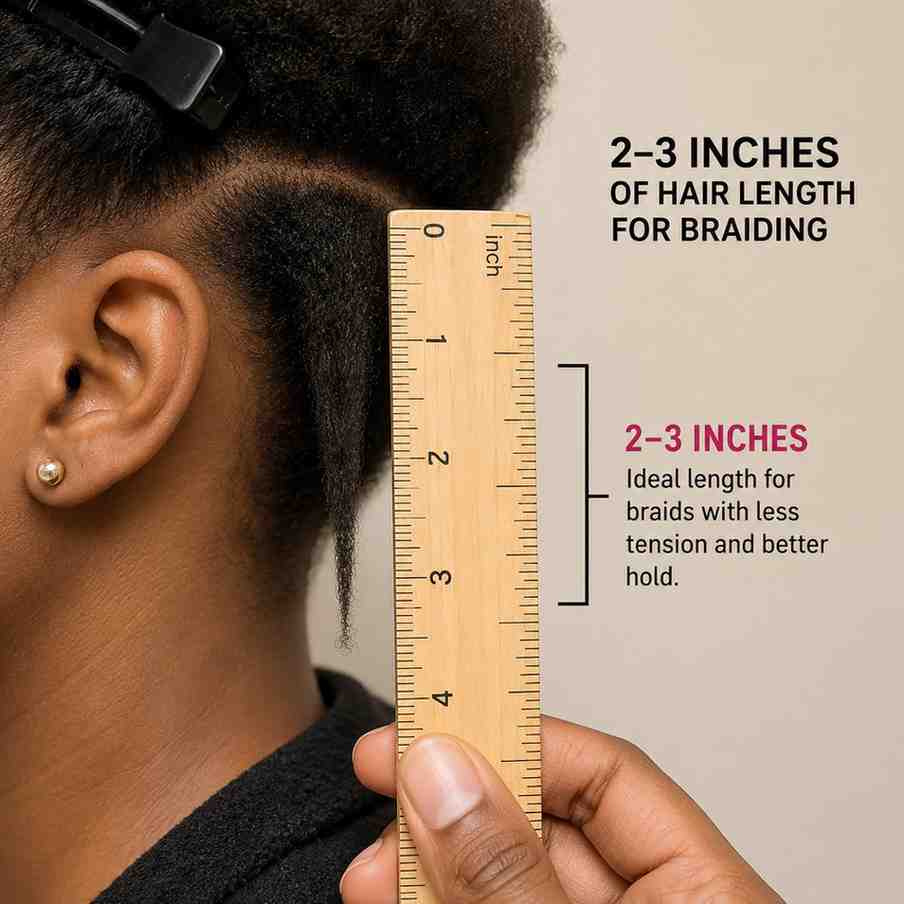
The minimum hair length for knotless braids is generally 2 to 3 inches. At this length, the braider has enough of your natural hair to grip, layer in the extension hair, and create a secure braid that lies flat. Hair shorter than 2 inches can slip out of the braid more easily and may not hold well.
The feed-in method is what makes shorter lengths possible. Instead of trying to braid only your natural hair, the braider adds extension hair in small amounts right from the start. This gives the braid structure and length without relying on your natural hair to carry all the weight.
Hair Length Guide by Braid Style
Use this guide to find the right braid size for your current hair length:
| Braid Size | Min. Hair Length | Best For | Notes |
| Small | 3+ inches | Fine to medium hair | More installation time; delicate edges |
| Medium | 2.5-3 inches | Most hair types | Best starting size for short hair |
| Jumbo | 2 inches | TWA to short hair | Easier to grip short hair; lighter than it looks |
Benefits of Knotless Braids for Short Natural Hair
Knotless braids are not just possible for short natural hair – they are one of the best protective styles you can choose. Here is why:
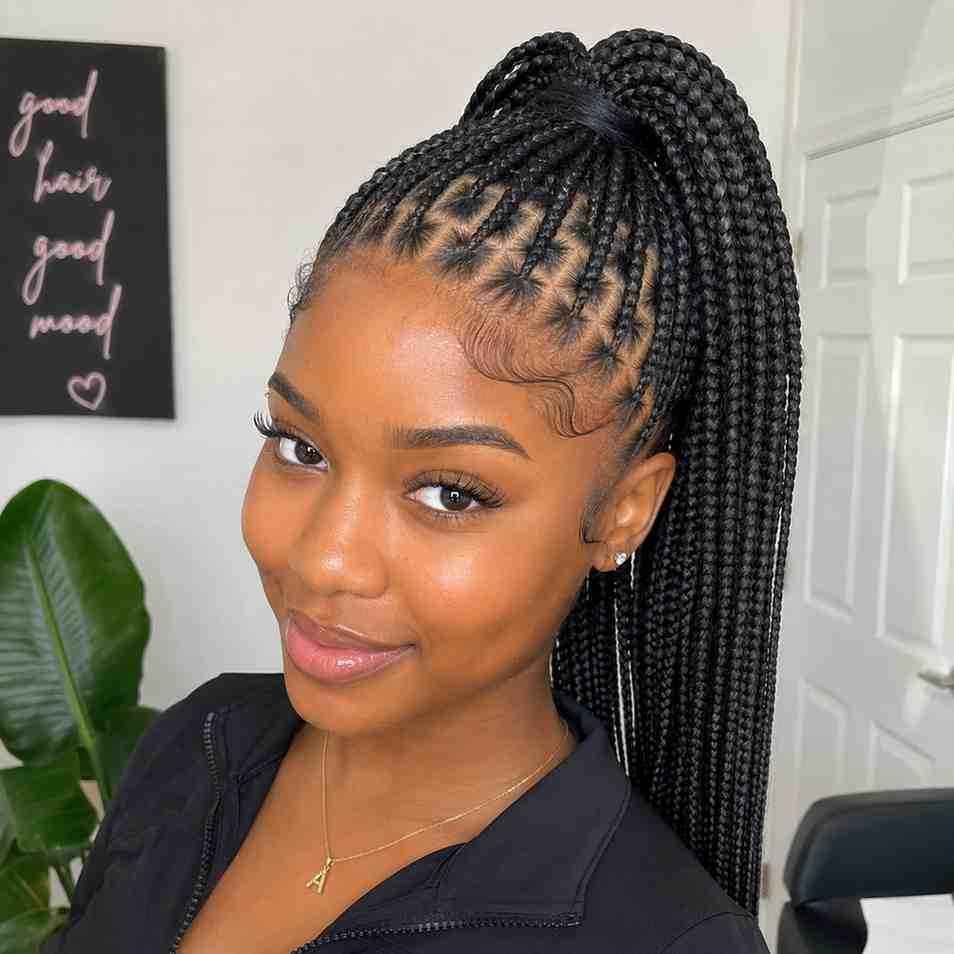
- Less tension on your scalp and edges. Because there is no knot pulling at the root, your edges and hairline stay protected. This matters especially for women with 4a, 4b, or 4c hair, where edges can be more fragile.
- A natural-looking start at the root. The feed-in technique creates a seamless blend between your natural hair and the extension. The braid appears to grow right out of your scalp, which looks clean and polished.
- Lower risk of breakage. Traditional braids with tight knots can cause stress fractures along the hair strand. Knotless braids distribute weight more evenly, which reduces that breakage risk.
- Length retention as a protective style. Tucking your ends away means less exposure to friction, heat, and daily manipulation. This allows your natural hair to grow and retain that growth while the braids are in.
- Versatile styling options. You can wear knotless braids in a high ponytail, a bun, half-up styles, or loose. Even with shorter natural hair underneath, the styling possibilities are wide.
How to Prepare Your Short Natural Hair for Knotless Braids
Good preparation makes a real difference in how your braids look and how long they last. Follow these steps before your appointment:
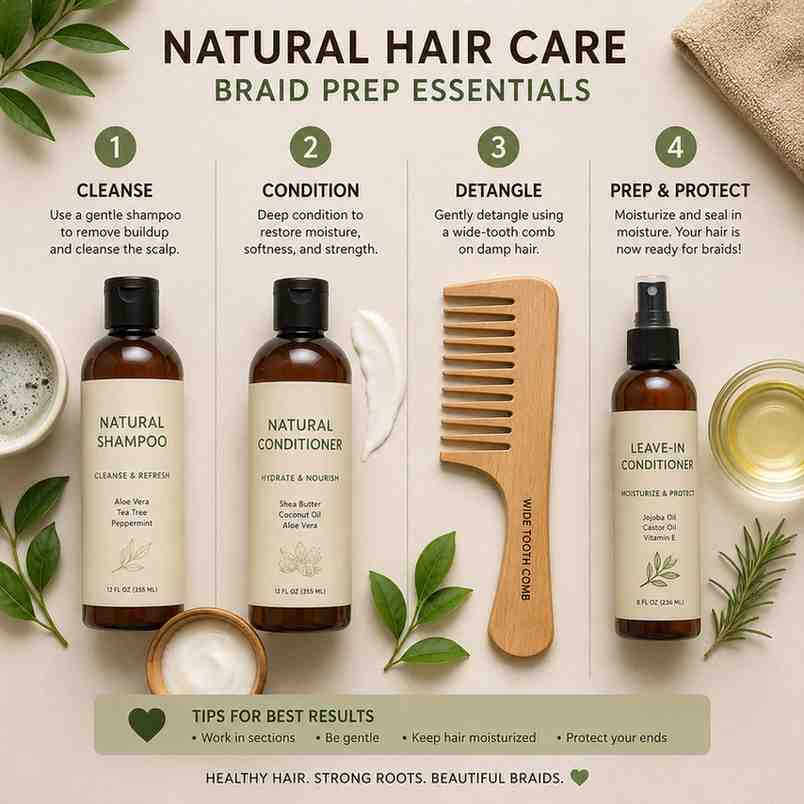
- Wash your hair. Use a clarifying or moisturizing shampoo to remove product buildup and dirt. Start with a clean base so your scalp stays healthy under the braids.
- Deep condition. Apply a deep conditioning treatment and leave it on for 20 to 30 minutes. Well-moisturized hair is more flexible, which makes it easier to braid and less prone to breakage.
- Detangle thoroughly. Work through your hair in sections using a wide-tooth comb or your fingers. Start from the ends and move toward the roots to avoid unnecessary shedding.
- Stretch your hair. Use the banding method (securing small sections with hair bands at intervals) or blow-dry on low heat. Stretched hair is easier for the braider to grip and manipulate cleanly.
- Trim any damaged ends. If you have split or brittle ends, trim them before braiding. Braiding over damaged ends can cause them to break further and shorten the life of your style.
A note on stretching: Short natural hair, especially 4c hair, shrinks significantly. A TWA that appears to be 1 inch can actually be 2 to 3 inches when stretched. Stretching your hair before the appointment gives your braider more to work with and produces a neater result.
Step-by-Step: How Knotless Braids Are Installed on Short Hair
Here is what the installation process looks like when done correctly on short natural hair:
- Section the hair. The braider parts the hair into clean, even sections. The size of each section determines the size of the finished braid.
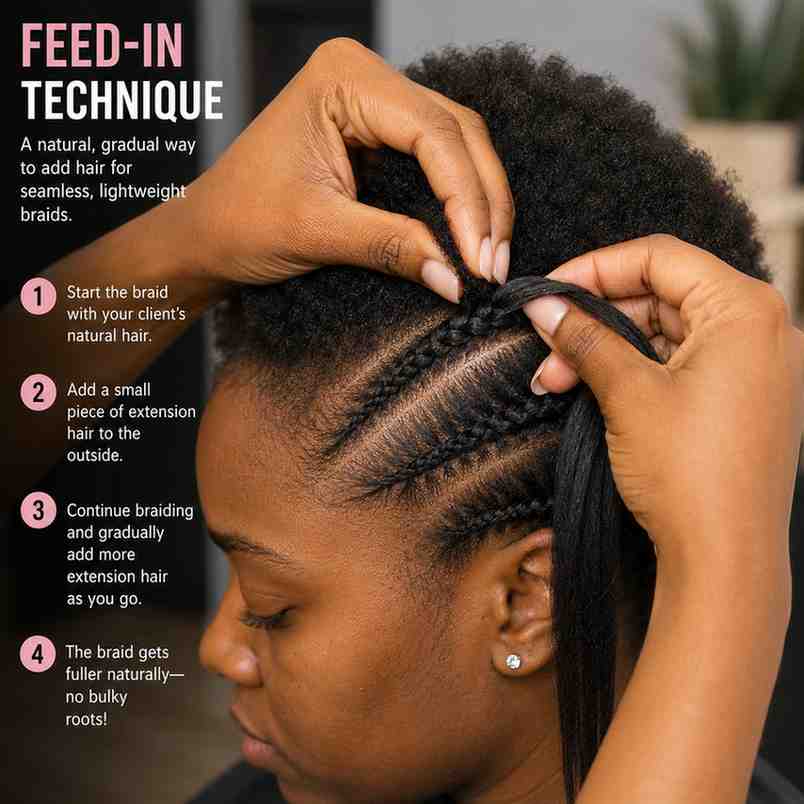
- Start with your natural hair. Unlike traditional braids, the braider begins with your own hair only – no extension hair is introduced at the root. This is the key to the flat, tension-free start.
- Feed in extension hair gradually. As the braid moves down the section, the braider adds small amounts of extension hair in stages. This is the feed-in method, and it is what makes knotless braids achievable on shorter lengths.
- Continue down to the desired length. The braider feeds in more extension hair until the braid reaches the length you want. The braid is then sealed at the tip.
- Repeat across the entire head. The process is repeated section by section until all braids are complete. Installation can take 4 to 8 hours depending on braid size and the braider’s speed.
For short natural hair specifically, a skilled braider will use lightweight extension hair and feed it in with smaller amounts than they might with longer hair. This prevents slipping and keeps the roots from feeling heavy.
Choosing the right braiding hair: Go for 100% kanekalon hair or a quality synthetic like Xpression or Outre X-Pression. Look for hair that is lightweight, smooth, and similar in texture to your natural hair. Avoid heavy or coarse extension hair – it adds unnecessary pull and can cause tension headaches.
Tips for Choosing the Right Braider
The braider you choose matters as much as the style itself. Not every braider has experience with short natural hair, and choosing the wrong one can lead to unnecessary damage.

Here is what to look for and ask:
- Check their portfolio. Ask to see before-and-after photos of clients with short natural hair. If all their portfolio photos show long hair, that is a sign they may not have much experience with TWA-length clients.
- Read reviews. Look for reviews that specifically mention short hair, thin hair, or sensitive edges. Positive results from clients with similar hair tell you more than general five-star ratings.
- Ask about their tension practices. A good braider will tell you they braid with light to medium tension and check in with you during the process. If they dismiss the question, move on.
- Request a consultation first. A braider who takes short natural hair seriously will want to see your hair before the appointment. This helps them plan the right braid size and extension hair.
Red flags to avoid: Be cautious of braiders who skip the consultation entirely, who insist on braid sizes that are too small for your hair length, or whose clients report sore scalps and thinning edges after their appointments.
How to Care for Knotless Braids on Short Natural Hair
Good maintenance keeps your scalp healthy and extends the life of your braids. Follow this routine:
![Black woman wrapping knotless braids in a satin bonnet at night for hair protection]](https://mitchystrands.com/wp-content/uploads/2026/05/Black-woman-wrapping-knotless-braids-in-a-satin-bonnet-at-night-for-hair-protection-1024x1024.jpeg "Can you get knotless braids on short natural hair? (Yes - here's how)")
- Moisturize your scalp regularly. Use a lightweight oil like jojoba, sweet almond, or a diluted peppermint oil mix. Apply it directly to your scalp every 2 to 3 days to prevent dryness and flaking.
- Care for your edges daily. Apply a light edge cream or oil to your hairline morning and night. Avoid heavy products that clog your follicles.
- Wrap your hair at night. Use a silk or satin scarf or bonnet every night. This reduces friction, prevents frizz, and keeps your braids looking fresh longer.
- Wash your braids every 2 to 3 weeks. Dilute a gentle shampoo with water and apply it to your scalp in sections. Rinse thoroughly and let your braids air dry completely before wrapping them.
- Take them down on time. Keep knotless braids in for 4 to 6 weeks maximum. Leaving them in longer causes new growth to mat and tangle around the braid base, which can lead to breakage when removing them.
Common Mistakes to Avoid
These are the most common mistakes women make with knotless braids on short natural hair – and how to avoid them:

- Installing on dry, unprepped hair. Braiding over hair that has not been washed, conditioned, or detangled leads to more breakage and a shorter style lifespan. Always prep your hair first.
- Choosing braiding hair that is too heavy. Heavy extensions put stress on your roots from the start. Stick to lightweight kanekalon or quality synthetic options, and opt for medium or jumbo braid sizes when your hair is short.
- Keeping braids in too long. Anything beyond 6 to 8 weeks risks matting and breakage at the root. More time does not mean more growth – it means more risk.
- Ignoring scalp health during the install. Scalp irritation, dryness, and flaking can start within the first week if you do not maintain moisture. Start your scalp care routine from day one.
- Skipping the stretching step. Short natural hair shrinks, and installing braids on shrunken hair gives the braider less to grip. Stretch your hair before every appointment for the best results.
Frequently Asked Questions
Yes – TWA knotless braids are possible when your hair is at least 2 to 3 inches long when stretched. The feed-in method allows the braider to work with minimal natural hair length by adding extension hair in small sections right from the start. Jumbo or medium knotless braids work best at this length because they are easier to grip and less likely to slip.
Knotless braids typically last 4 to 6 weeks on short natural hair. How long they stay neat depends on how well you maintain them – regular scalp moisturizing, nighttime wrapping, and careful washing all help them last closer to the 6-week mark. Do not push past 8 weeks, as new growth will begin to lock around the braid base.
Knotless braids do not directly cause growth, but they support length retention. By keeping your natural hair tucked away and protected from daily manipulation, friction, and heat, you give it a chance to grow without breaking off at the ends. Many women see noticeable length gains after a few protective style cycles.
Medium or jumbo knotless braids are generally the best choice for short natural hair. They are easier for the braider to anchor on shorter lengths, they put less stress on your scalp, and they look proportionate. Small knotless braids are possible but require more length and a very experienced braider to avoid tension at the roots.
Conclusion
Knotless braids are a genuinely great option for short natural hair – and you do not need to wait until your hair grows out to enjoy them. With the right preparation, a skilled braider who understands short hair, and a solid maintenance routine, this style can protect your hair and give you a look you love. Your short hair is already enough. Now go book that consultation, or share this article with a friend who needs the push to take the leap.